Idea & feasibility
Define the product, material, target capacity and the technical question that must be answered.
TECHNOLOGY PORTFOLIO
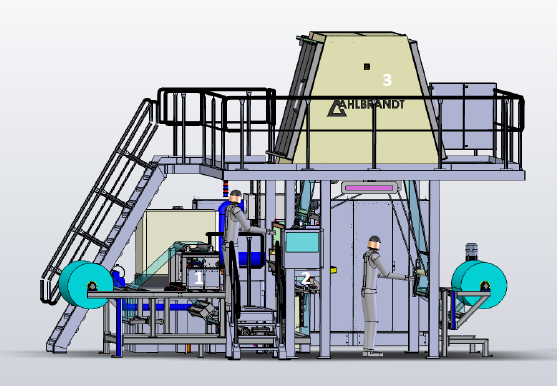
Atmospheric and low-pressure systems for activation, cleaning, desizing and functional finishing.
Explore →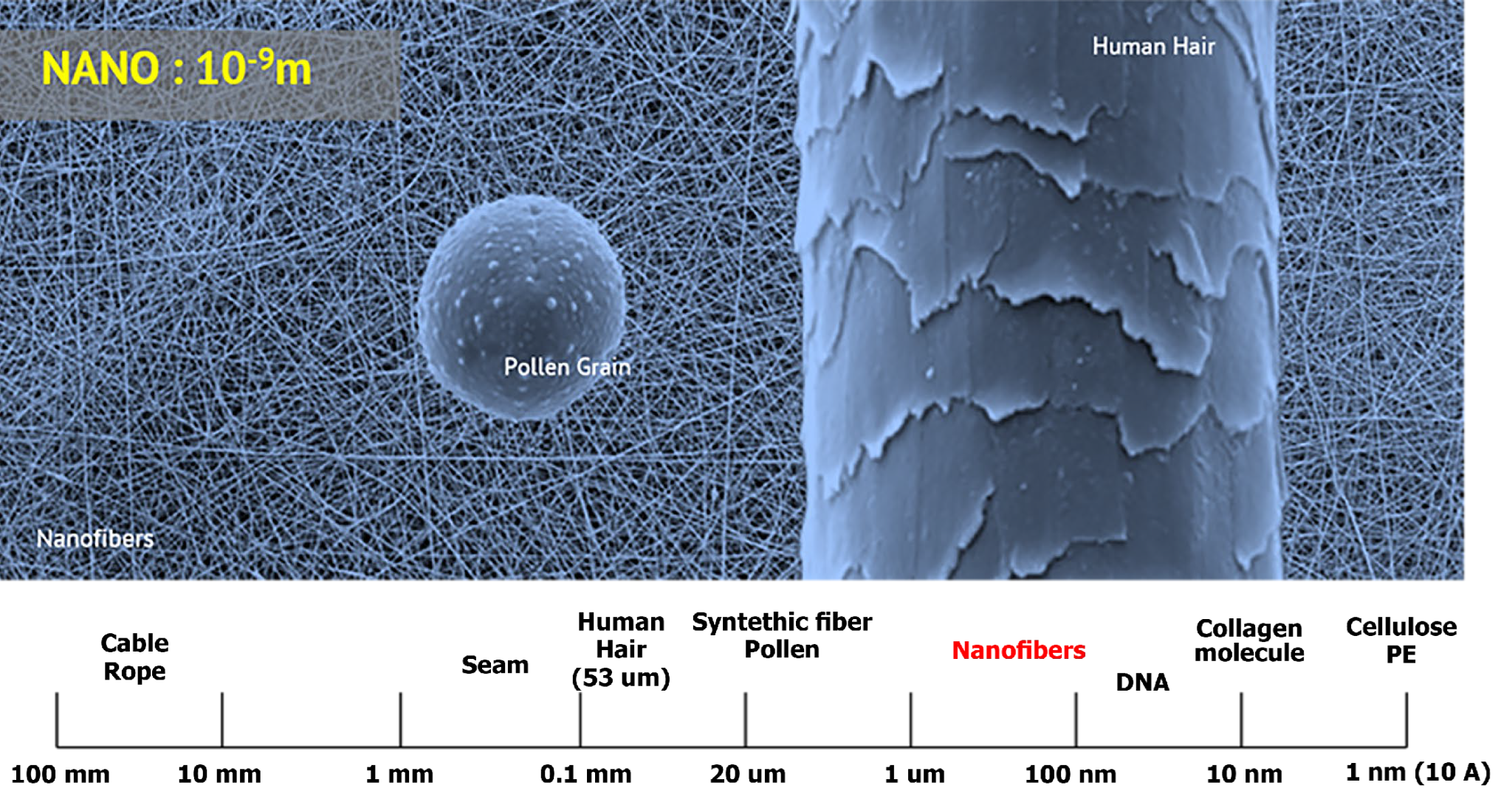
Electrospinning, nano blowing and continuous nanofiber deposition for membranes, filtration and coatings.
Explore →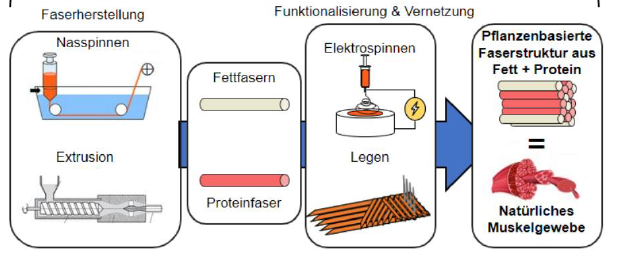
Fiber-based scaffolds, medical patches, membranes and structures developed from bio-derived materials.
Explore →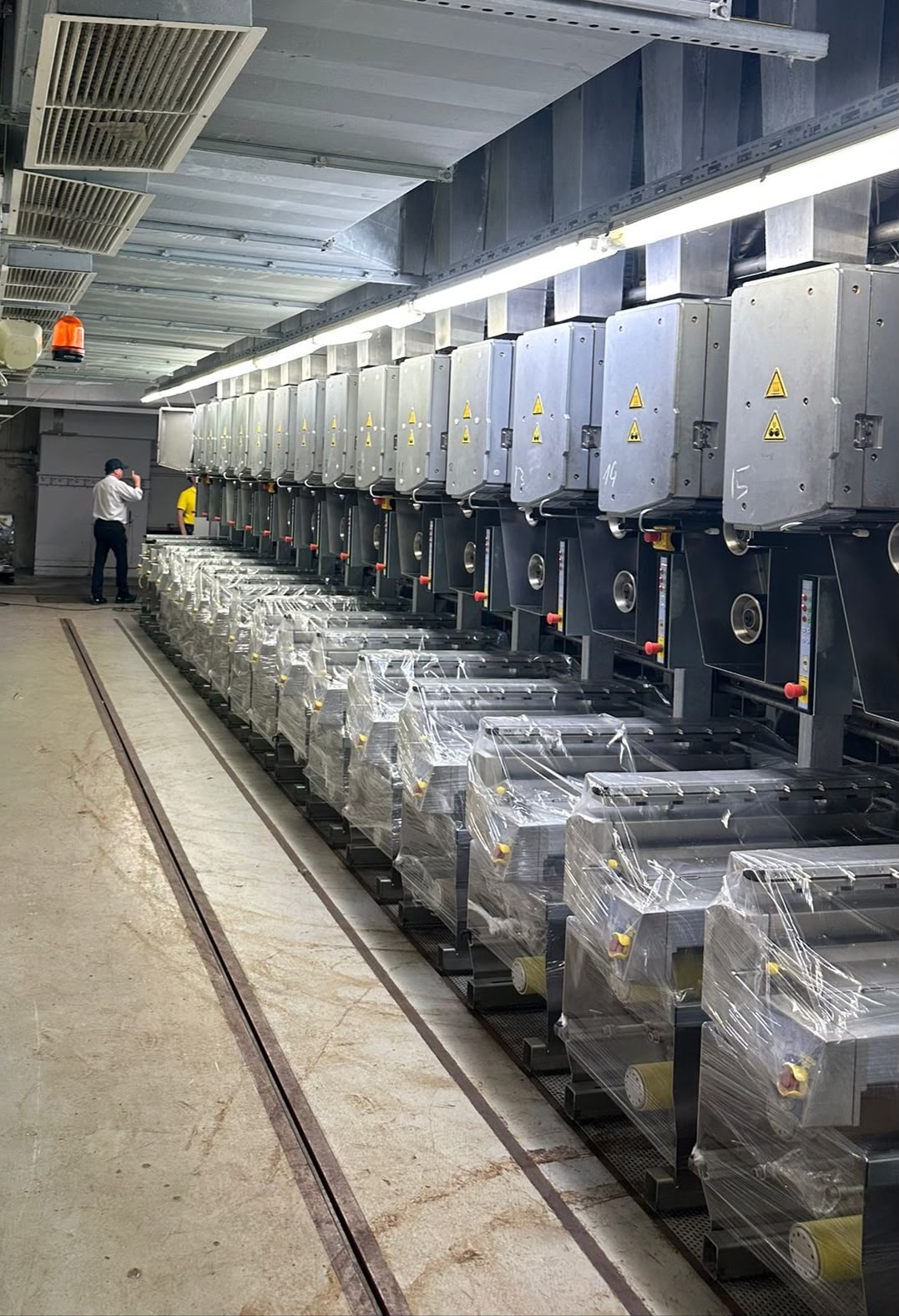
Integrated concepts for PET, PA, PP, acrylic, carbon, glass, basalt and specialty fibers.
Explore →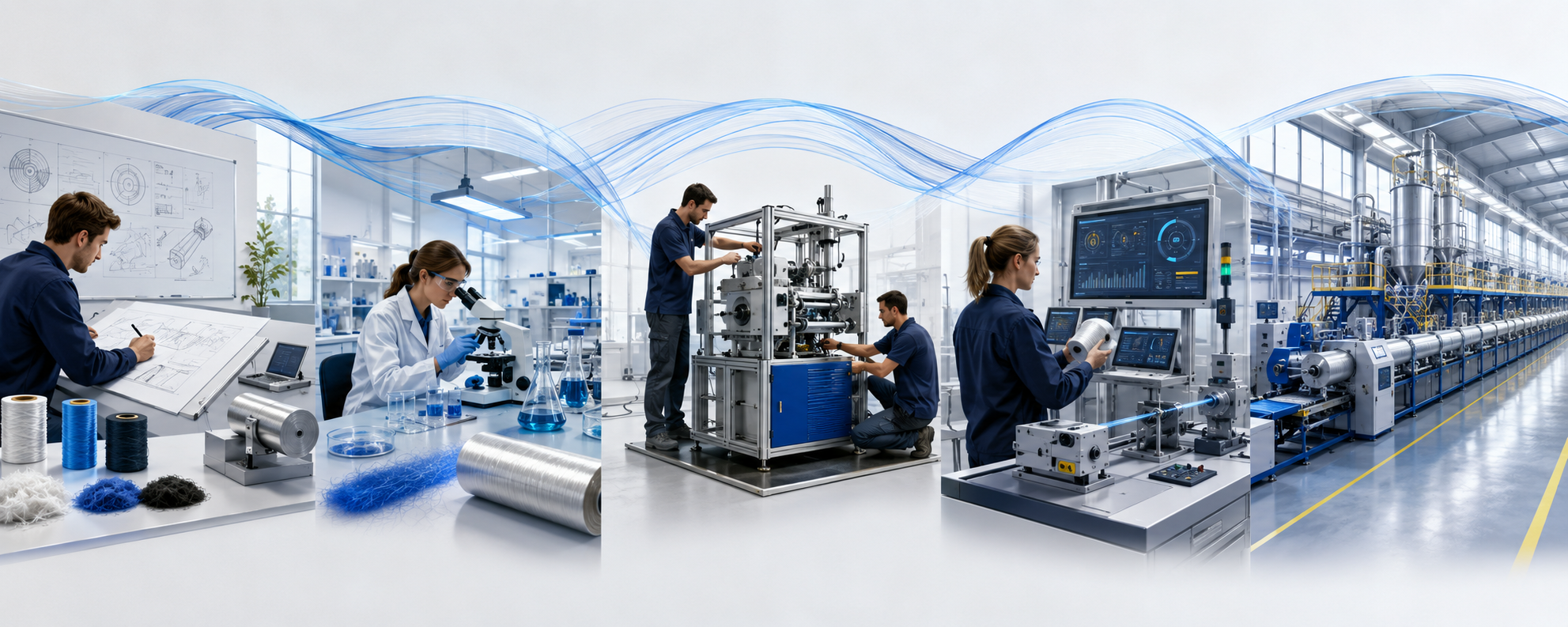
A measured route from process definition and pilot trials to industrial engineering and commissioning.
Explore →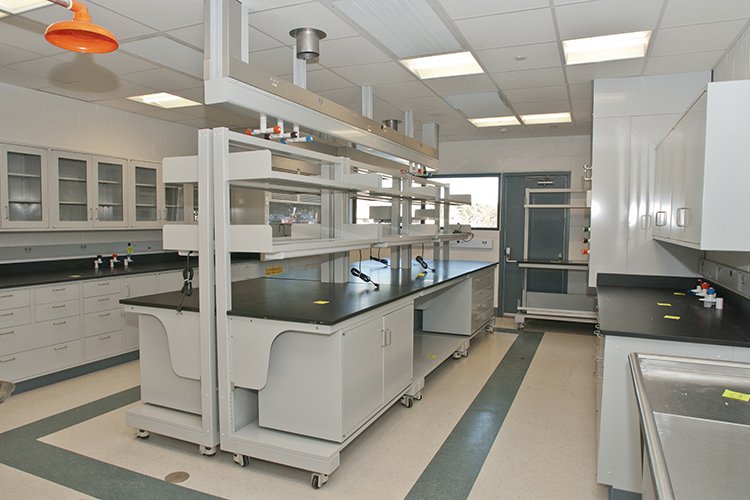
Flexible platforms for controlled trials, sample production, validation and technology transfer.
Explore →PARTNER FROM MATERIAL TO PLANT
EPCOTEC develops production technologies for fibers, surfaces and advanced materials when a standard machine is not enough. Our work begins with the required product outcome: its structure, performance, quality level, capacity and cost target.
We connect polymer and mineral processing, textile engineering, plasma treatment, nanofiber formation, biotechnology and automation. This cross-disciplinary view is essential because material preparation, fiber forming, atmosphere, temperature, tension, finishing and downstream handling influence one another.
For new concepts we first isolate the critical technical risks. Laboratory work identifies the mechanism; a purpose-built pilot then reproduces the essential process conditions with representative equipment, controls and interfaces. Samples and operating data are evaluated against agreed technical and economic criteria.
Only after the pilot is stable do we define scale-up. The measured mass and energy balances, residence times, transfer coefficients, utilities, safety requirements and quality limits become the basis for industrial engineering. This approach reduces uncertainty before major investment and creates a practical route from an idea to a reliable production plant.
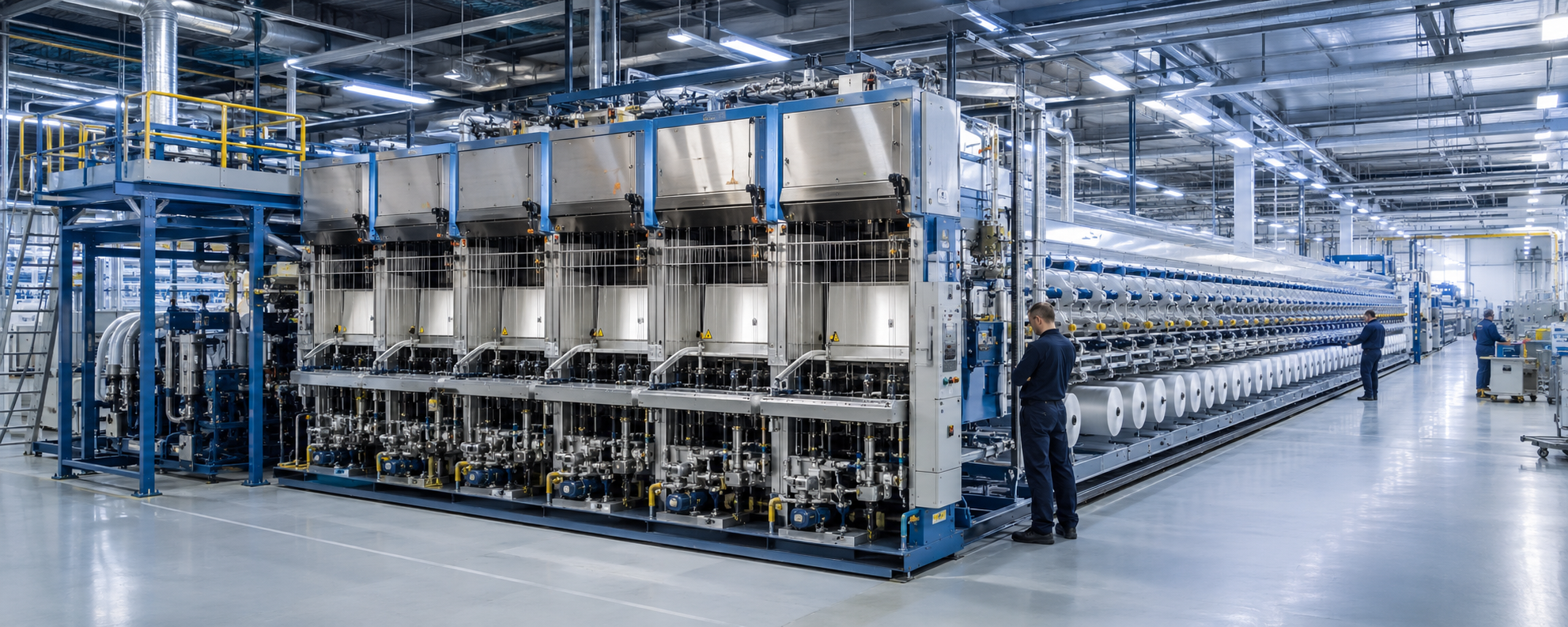
THE EPCOTEC PATH
Every stage has a defined decision, measurable output and documented handover. The sequence can support a completely new technology, a plant modernization or the transfer of an existing process to a new capacity.
Define the product, material, target capacity and the technical question that must be answered.
Investigate material behavior, process mechanisms and the first measurable operating window.
Build a technically representative pilot with realistic interfaces, controls and safety functions.
Prove quality, repeatability, stability, utilities, safety and the economic assumptions.
Translate validated data into the production plant, then manufacture, commission and optimize it.
PROJECTS & PLANTS
The following flows are original EPCOTEC summaries developed from our engineering experience. They describe the logic of a plant without reproducing third-party drawings: the final equipment arrangement, dimensions and interfaces are always engineered for the product, feedstock, capacity and site.
SYNTHETIC & POLYMER FIBERS
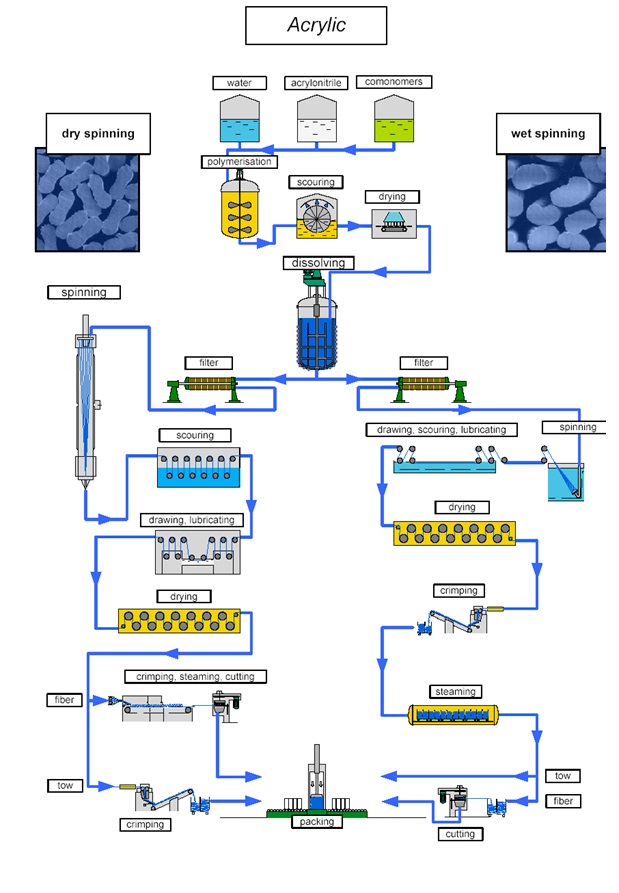
Polyester, polyamide, polypropylene and acrylic production can follow melt, solution, wet, dry or dry-jet wet routes. EPCOTEC begins by defining polymer quality, viscosity, moisture, additives and thermal history. The preparation section may include polymerisation, chip drying, melt generation or dissolution, followed by accurate dosing, homogenisation and filtration.
Fiber formation is designed around the rheology and final geometry. Spinneret design, pressure, temperature, quench air or coagulation bath conditions determine the emerging filament. Drawing then aligns the molecular structure and establishes strength and elongation. Heat setting, washing, lubrication, crimping, cutting, texturing or winding complete the product-specific route. Ventilation, solvent recovery, waste handling, automation and laboratory quality control are integrated as plant systems rather than treated as later additions.
GLASS, BASALT & MINERAL FIBERS
Mineral-fiber plants start with consistent raw-material chemistry and controlled batch preparation. Melting and refining must deliver a homogeneous melt at the correct temperature and viscosity while limiting inclusions, emissions and energy loss. Melt distribution, forehearth design and the fiber-forming zone are coordinated so each production position receives stable material conditions.
Continuous filament routes use bushings and high-speed attenuation before sizing, gathering and winding. Insulation or mat routes use centrifugal or air-assisted fiberisation, binder application, web collection, curing and cutting. Basalt and specialty mineral systems may require different furnace materials, atmosphere control and operating windows. EPCOTEC integrates furnace, forming, cooling, binder or sizing, exhaust, utilities, controls, handling and finishing into one buildable plant layout.
GERMAN ENGINEERING · ADVANCED MATERIALS
EPCOTEC turns scientific ideas into validated processes, specialized machinery and industrial production systems.
PILOT → VALIDATION → SCALE-UP
EPCOTEC designs the smallest system that still represents the decisive industrial physics and interfaces. Depending on the process, that may include realistic residence time, melt or solution circulation, temperature gradients, airflow, tension control, deposition width, exhaust, cleaning, automation and continuous material handling. The pilot is operated across a planned test matrix, not only at one successful point.
Convert product and business objectives into measurable process questions.
Engineer and integrate the pilot, instrumentation, controls and safety functions.
Map the operating window with structured trials, samples and repeat runs.
Connect quality results to process variables and establish scale-up relationships.
Size equipment, close interfaces, engineer the plant and support commissioning.
Fiber diameter, strength, uniformity, surface function and customer-specific acceptance criteria.
Verified samples and a documented quality windowStart-up, steady operation, disturbances, cleaning, shutdown and repeatability over extended runs.
Operating envelope and control philosophyMass and energy balances, residence time, heat and mass transfer, throughput and equipment loading.
Design basis for industrial sizingHazards, containment, exhaust, solvent or gas handling, emissions and operator intervention.
Safety concept and interface requirementsElectricity, heat, cooling, compressed air, water, gases, consumables and labor.
Utility schedule and realistic production cost basis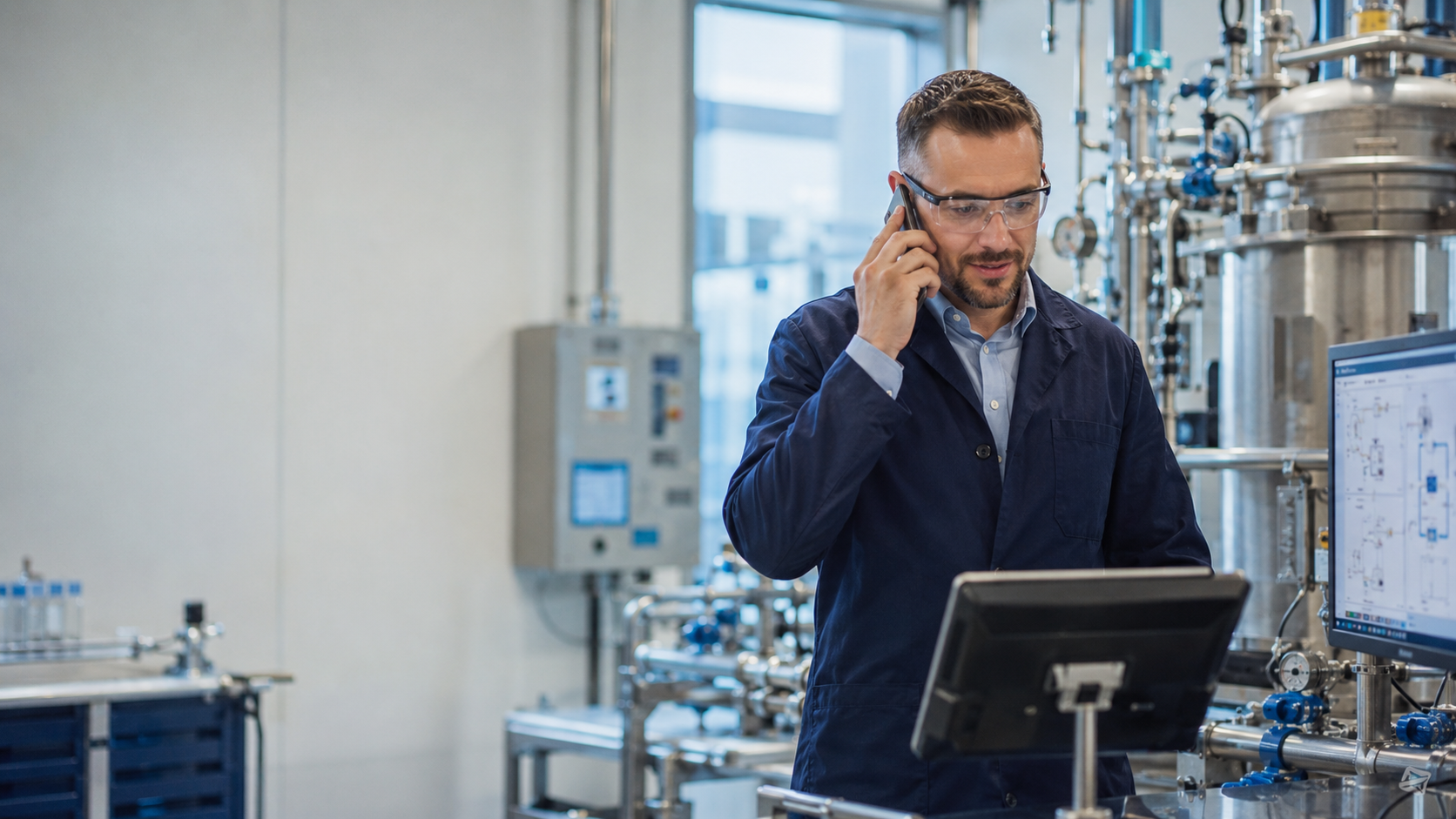
TECHNICAL CONTACT · EPCOTEC GMBH
A useful first discussion normally begins with four facts: the material or feedstock, the intended product, the required capacity and the current project status. Our engineering team can then identify the next practical step - from a focused test to a pilot program or an industrial plant study.
Start a technical conversation