PET
01
Polyester
Feed: PTA/MEG continuous melt or polymer chips
Products: POY, FDY, industrial yarn, staple fiber and nonwovens
Polymer→Melt→Spin→Draw→Wind
ADVANCED FIBER & PETROTEXTILE PLANTS
EPCOTEC develops integrated production routes for acrylic and PAN precursor, carbon fiber, polyester, polyamide, polypropylene, glass and basalt. We connect product definition, process technology, pilot evidence, machinery, utilities, automation and commissioning so that every industrial investment begins with a measurable technical basis.
GENERAL PROJECT APPROACH
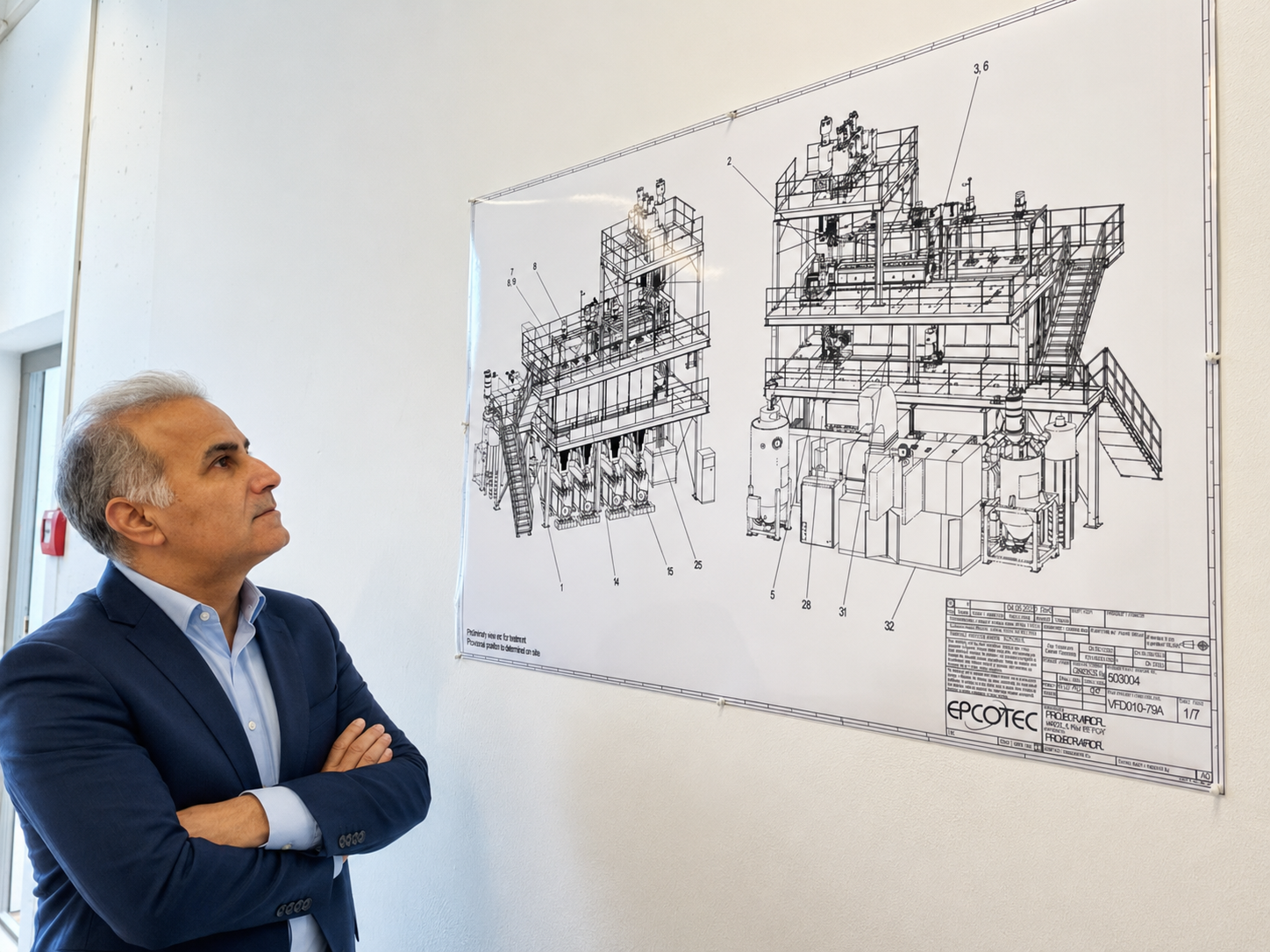
A reliable fiber plant is a chain of interdependent chemical, thermal, mechanical and textile operations. Feedstock purity influences polymerisation; polymer molecular weight and moisture influence melt stability; filtration and residence time influence spinning continuity; quench conditions and draw ratios determine orientation, tenacity and shrinkage. Finishing, heat treatment, crimping, cutting and winding then convert the emerging filament into a marketable product.
EPCOTEC therefore starts with the required fiber rather than a catalogue machine. We translate end-use performance, product mix, capacity and cost targets into a complete process route. For a new plant this includes technology comparison, block and process-flow diagrams, mass and energy balances, equipment sizing, utility concepts, layout, automation, environmental systems and project economics. For an existing plant it begins with a structured audit of quality limitations, bottlenecks, energy consumption, maintenance condition and control philosophy.
The selected process is reduced to its decisive risks and validated at laboratory or pilot scale. Representative material is produced under controlled conditions; samples, operating windows, mass transfer, heat load, residence time, solvent or gas handling and product consistency are documented. This evidence becomes the design basis for industrial scale-up instead of relying on unverified assumptions.
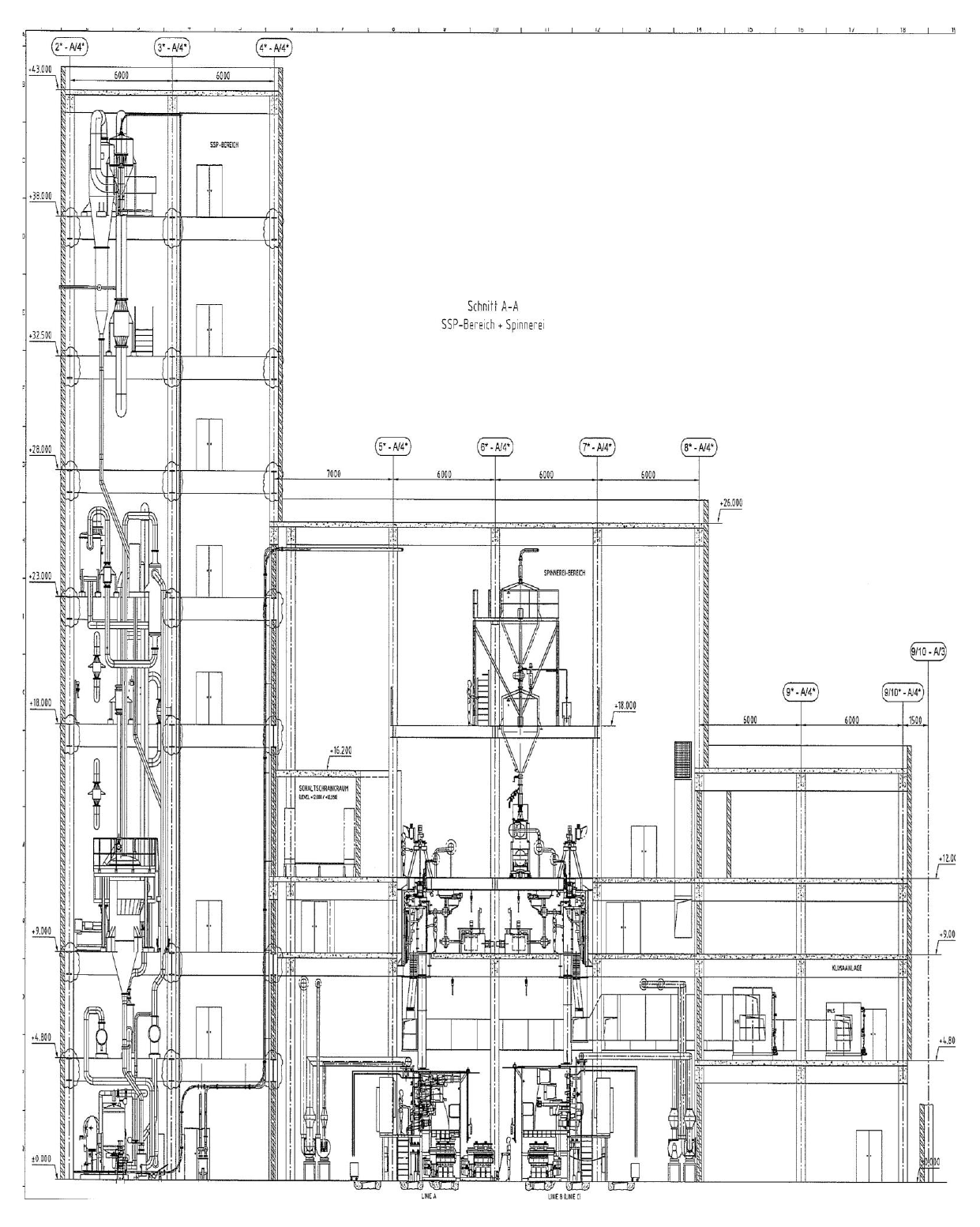
During engineering, EPCOTEC coordinates the interfaces between polymer preparation, spinning, downstream treatment, utilities, buildings, controls and supplier packages. The resulting scope may range from feasibility and modernization to a complete EPC project including procurement, installation supervision, commissioning, performance trials and training.
ACRYLIC & PAN PRECURSOR
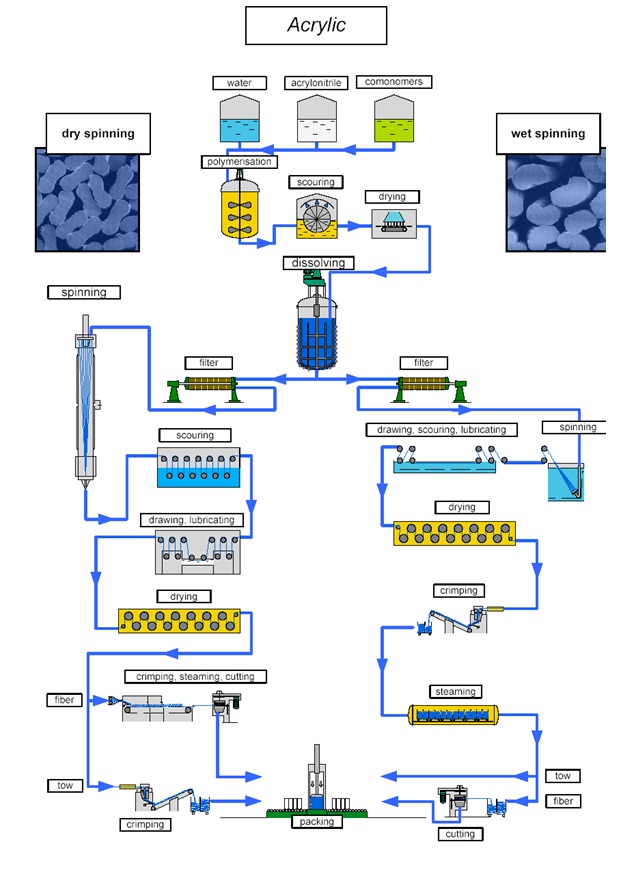
Acrylic production may use suspension polymerisation followed by dissolution or solution polymerisation with direct dope preparation. EPCOTEC engineers the full route: monomer and comonomer dosing, polymerisation, washing and drying, solvent preparation, dissolution, filtration, deaeration and accurate metering to spinnerets.
Wet, dry and dry-jet wet spinning each demand a specific relationship between dope rheology, spinneret geometry, coagulation, solvent diffusion and line speed. Washing, multi-stage drawing, finish application, drying, annealing, crimping, cutting, tow handling and packaging are then integrated with solvent recovery, bath management, ventilation and wastewater treatment. For PAN precursor, filament uniformity, defect control and tension history are treated as inputs to the later stabilization and carbonization process.
CARBON FIBER
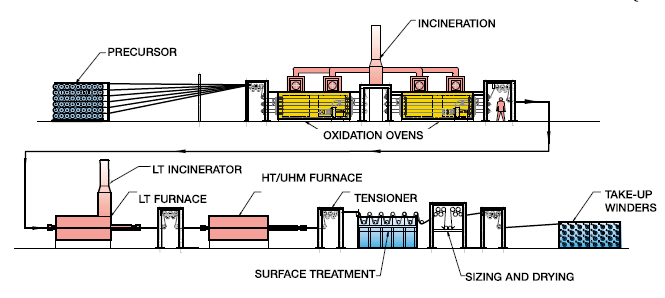
The precursor first passes through staged oxidation ovens under a precisely controlled temperature, airflow, residence-time and tension profile. Stabilized fiber is then converted in low- and high-temperature furnaces under inert atmosphere. Uniform thermal exposure and filament tension are essential to prevent fusion, broken filaments and variability across the tow.
After carbonization, electrochemical surface treatment improves adhesion to downstream resin systems; washing, sizing, drying and winding create the final product interface. EPCOTEC integrates oxidation, LT and HT furnaces, nitrogen and exhaust systems, tension stands, surface treatment, sizing, drying, take-up, controls and laboratory validation. Projects can cover new lines, precursor qualification, pilot conversion or modernization of existing thermal and handling sections.
PETROTEXTILE & SYNTHETIC FIBER PLANTS
Feed: PTA/MEG continuous melt or polymer chips
Products: POY, FDY, industrial yarn, staple fiber and nonwovens
Feed: Caprolactam polymerisation or dried chips
Products: Textile filament, carpet yarn, industrial yarn and staple
Feed: Nylon salt, polymer or conditioned chips
Products: Technical yarn, airbag, tire cord and textile filament
Feed: Granules, masterbatch and functional additives
Products: Staple, multifilament, spunbond and meltblown
GLASS & BASALT FIBER
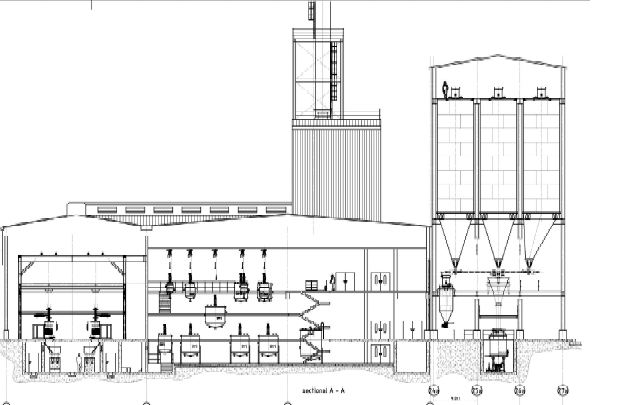
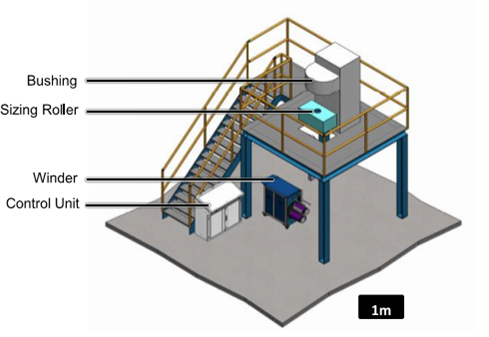
Glass and basalt projects begin with feedstock characterization, recipe control and raw-material handling. The furnace and forehearth must deliver a chemically homogeneous melt at the viscosity and temperature required by the selected fiber-forming system. Textile glass routes use bushings, sizing applicators and high-speed winders; insulation and nonwoven routes may use alternative fiberisation, binder application, collection and curing.
EPCOTEC combines the overall plant architecture with pilot-scale validation of the decisive forming step. Furnace capacity, melt residence time, bushing loading, filament diameter, cooling, sizing chemistry, winding tension and final product handling are evaluated as one system. Environmental controls, utilities, refractory concepts, quality laboratories and downstream fabrication are included in the plant boundary where required.
PLANT DEVELOPMENT
EPCOTEC works with the customer’s product specialists, civil and utility teams, equipment suppliers and operating personnel to transform the validated process into a buildable plant. Layout reviews address material flow, maintenance access, operator safety, building loads, ventilation, logistics and future expansion—not only the position of the machines.
At each design review, process and mechanical interfaces are checked against the product target and pilot evidence. This keeps supplier packages aligned, prevents gaps between scopes and gives the owner a clear basis for investment, procurement and acceptance.
Discuss a fiber plantTHE EPCOTEC PROJECT PRINCIPLE
Every new EPCOTEC process begins with a purpose-built pilot system. We verify material behavior, product quality, operating stability, safety, energy demand and all critical interfaces. Only after the pilot meets the agreed technical and economic criteria do we define the industrial scale-up and production plant.